nLab D=5 supergravity
Context
Gravity
Formalism
Definition
Spacetime configurations
Properties
Spacetimes
| black hole spacetimes | vanishing angular momentum | positive angular momentum |
|---|---|---|
| vanishing charge | Schwarzschild spacetime | Kerr spacetime |
| positive charge | Reissner-Nordström spacetime | Kerr-Newman spacetime |
| wormhole spacetimes | vanishing angular momentum |
|---|---|
| vanishing charge | Schwarzschild wormhole |
| positive charge | Reissner-Nordström wormhole |
Quantum theory
String theory
Ingredients
Critical string models
Extended objects
Topological strings
Backgrounds
Phenomenology
Physics
physics, mathematical physics, philosophy of physics
Surveys, textbooks and lecture notes
theory (physics), model (physics)
experiment, measurement, computable physics
-
-
-
Axiomatizations
-
Tools
-
Structural phenomena
-
Types of quantum field thories
-
Contents
Idea
supergravity in dimension 5.
For this arises from 11-dimensional supergravity by KK-compactification on a Calabi-Yau manifold of complex dimension 3 (see at M-theory on Calabi-Yau manifolds), hence serves as the low-energy effective field theory of the strong-coupling version of Calabi-Yau compactifications of type IIA string theory (see supersymmetry and Calabi-Yau manifolds)
Properties
5d Chern-Simons term
The theory has a 2-form flux density , locally , with a 5d Chern-Simons theory action functional locally of the form (Cremmer 1981, p. 276, Chamseddine & Nicolai 1980 (4), cf. Castellani-D’Auria-Fre (III.5.70), Gauntlet, Myers & Townsend 1998, p. 3, GGHPR 02 (2.1), Bonetti-Grimm-Hohenegger 13).
Hence the bosonic field sector of supergravity is Einstein-Maxwell-Chern-Simons theory in 5D, where the equation of motion for the flux density is of the non-linear form
with the Hodge dual of (cf. GGHPR 02 (2.2)).
This is reflected in the corresponding cochains on super Minkowski spacetime
satisfying
due to the Fierz identity in Castellani-D’Auria-Fré 91 (III.5.50a), this example:
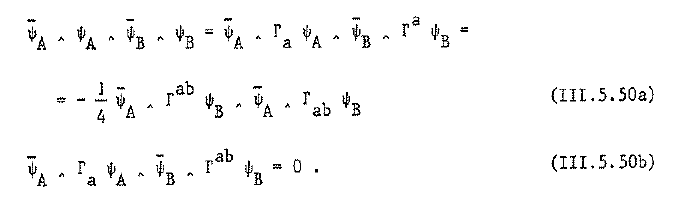
(the other Fierz identity (III.5.50a) gives the cocycle for the membrane (super 2-brane in 5d) , , that appears already in the old brane scan. )
This is a lower dimensional analogue to the situation for the C-field (locally ) in 11-dimensional supergravity, which has a Chern-Simons term locally of the form and hence the equation of motion
with .
Black holes and black (st)rings
The first black ring solution in 5d sugra was found in (Elvang-Emparan-Mateos-Reall 04, Elvang-Emparan-Mateos-Reall 05).
Supersymmetric black holes exist precisely only in dimensions 4 and 5 (Gauntlett-Myers-Townsend 98). These play a key role in the discussion of black holes in string theory.
(There are supersymmetric particle-like solutions of supergravity theories that are sometimes called black holes, but these are always singular. There are also supersymmetric black holes in , but the spacetime in that case is asymptotically anti-de Sitter spacetime rather than asymptotically flat. Of course, there are non-singular supersymmetric black brane solutions in various supergravity theories but these are neither ‘particle-like’ nor, strictly speaking, asymptotically flat.)
Relation to 11D supergravity
Structural similarity between D=11 and minimal D=5 supergravity
(cf. Mizoguchi & Ohta 1998; Fujii, Kemmoku & Mizoguchi 1999, 2000)
| bulk spacetime dimension | ||
|---|---|---|
| bulk (higher) gauge field | C-field | MCS field |
| electric brane | probe M2-brane black M2-brane | ?0-brane black hole in 5D |
| magnetic brane | probe M5-brane black M5-brane | L1-brane black string |
| near horizon geometries | el: mg: | el: mg: |
| bulk magnetic flux density | ||
| bulk electric flux density | ||
| chiral flux on mg brane | ||
| Bianchi identities | ||
| proper flux quantization minimally classified by | quaternionic Hopf fibration | complex Hopf fibration |
Discussion of 5d supergravity as a KK-compactification of 11-dimensional supergravity on a Calabi-Yau manifold of complex dimension 3 (M-theory on Calabi-Yau manifolds): Hull & Townsend 1995 p.30-31, Cadavid, Ceresole, D’Auria & Ferrara 1995 Ferrara, Khuria & Minasian 1996, Ferrara, Minasian & Sagnotti 1996).
U-duality
supersymmetry
Consider super Lie algebra cocoycles on 5d super-Minkowski spacetime (as in the brane scan).
With the notation as used at super Minkowski spacetime – Canonical coordinates, there are now two copies of spinor-valued 1-forms, denoted and . We use indices of the form for these. Then the non-trivial bit of the Chevalley-Eilenberg algebra differential for , super Minkowski spacetime is
where summation over repeated indices is understood.
There is a Fierz identity
(Castellani-D’Auria-Fré (III.5.50a))
This implies that
There is a 4-cocycle of the form
(Castellani-D’Auria-Fré (III.5.50b), (III.5.53c))
Related concepts
-
10-dimensional type II supergravity, heterotic supergravity
References
General
Original discussion:
-
Ali Chamseddine, Hermann Nicolai: Coupling the Supergravity Through Dimensional Reduction, Physics Letters B 96 1–2 (1980) 89-93 [doi:10.1016/0370-2693(80)90218-X, pdf]
Corrigendum: Phys. Lett. B 785 (2018) 631-632 [arXiv:1808.08955, doi:10.1016/j.physletb.2018.05.029]
-
Eugène Cremmer: Supergravities in 5 Dimensions, in Stephen Hawking, Martin Roček (eds.): Superspace and Supergravity, Proceedings of Nuffield Workshop 1980, Cambridge University Press (1981) 267-282 [pdf, ISBN:9780521239080, inSpire:172773, cds:100081]
-
Leonardo Castellani, Riccardo D'Auria, Pietro Fré, chapter III.5 of Supergravity and Superstrings - A Geometric Perspective, World Scientific (1991) [ch III.5: pdf]
Textbook account:
- Tomás Ortín: §9 in: Gravity and Strings, Cambridge University Press (2010, 2015) [doi:10.1017/CBO9780511616563, doi:10.1017/CBO9781139019750]
Further discussion:
-
William Linch III, Markus A. Luty, J. Phillips, Five dimensional supergravity in superspace, Phys. Rev. D 68 (2003) 025008 [arXiv:hep-th/0209060]
-
Jerome Gauntlett, Jan Gutowski, Christopher Hull, Stathis Pakis, Harvey Reall, All supersymmetric solutions of minimal supergravity in five dimensions, Class. Quant. Grav. 20 (2003) 4587-4634 [arXiv:hep-th/0209114, doi:10.1088/0264-9381/20/21/005]
-
Sorin Cucu, From M-theory to supergravity and duality-symmetric theories [arXiv:hep-th/0310105]
-
Eric Bergshoeff, Sorin Cucu, Tim de Wit, Jos Gheerardyn, Stefan Vandoren, Antoine Van Proeyen, supergravity in five dimensions revisited [arXiv:hep-th/0403045]
-
Gerard Clement: The symmetries of five-dimensional minimal supergravity reduced to three dimensions, J. Math. Phys. 49 (2008) 042503 [arXiv:0710.1192, doi:10.1063/1.2907863] Erratum-ibid. 49 (2008) 079901 [doi:10.1063/1.2963308]
-
Katrin Becker, Melanie Becker, Daniel Butter, William Linch III, Stephen Randall: Five-dimensional Supergravity in Superspace, J. High Energ. Phys. 2020 98 (2020) [arXiv:1909.09208, doi:10.1007/JHEP03(2020)098]
-
Edoardo Lauria, Antoine Van Proeyen, Supergravity in Dimensions [arXiv:2004.11433]
Construction of 5d gauged supergravity via D'Auria-Fré formulation of supergravity:
-
Laura Andrianopoli, Francesco Cordaro, Pietro Fré, Leonardo Gualtieri, Non-Semisimple Gaugings of Supergravity and FDA.s, Class. Quant. Grav. 18 (2001) 395-414 [arXiv:hep-th/0009048, doi:10.1088/0264-9381/18/3/303]
-
Laura Andrianopoli, Francesco Cordaro, Pietro Fré, Non-Semisimple Gaugings of Supergravity, Fortsch.Phys. 49 (2001) 511-518 [arXiv:hep-th/0012203]
See also:
-
Sheldon Katz, Hee-Cheol Kim, Houri-Christina Tarazi, Cumrun Vafa: Swampland Constraints on Supergravity [arXiv:2004.14401]
-
Andrew Beckett, José Figueroa-O'Farrill: Killing superalgebras for lorentzian five-manifolds [arxiv:2105.05775]
-
Soumya Adhikari, Bindusar Sahoo: conformal supergravity in five dimensions [arXiv:2312.01879]
-
Edoardo Colombo, Vasil Dimitrov, Dario Martelli, Alberto Zaffaroni: Patch-wise localization with Chern-Simons forms in five dimensional supergravity [arXiv:2511.13824]
KK-Reduction of 11D SuGra on s to 5D SuGra
Discussion of KK-compactification of D=11 supergravity on Calabi-Yau 3-folds to D=5 supergravity (cf. M-theory on Calabi-Yau manifolds):
-
Chris Hull, Paul Townsend, p 30-31 of: Unity of Superstring Dualities, Nucl. Phys. B 438 (1995) 109-137 [doi:10.1016/0550-3213(94)00559-W, arXiv:hep-th/9410167]
-
George Papadopoulos, Paul K. Townsend: Compactification of supergravity on spaces of exceptional holonomy, Phys. Lett. B 357 (1995) 300-306 [doi:10.1016/0370-2693(95)00929-F, arXiv:hep-th/9506150]
-
A. C. Cadavid, Anna Ceresole, Riccardo D'Auria, Sergio Ferrara: 11-Dimensional Supergravity Compactified on Calabi-Yau Threefolds, Phys. Lett. B 357 (1995) 76-80 [doi:10.1016/0370-2693(95)00891-N, arXiv:hep-th/9506144]
-
Sergio Ferrara, Ramzi R. Khuri, Ruben Minasian: M-theory on a Calabi-Yau manifold, Phys. Lett. B 375 (1996) 81-88 [doi:10.1016/0370-2693(96)00270-5, arXiv:hep-th/9602102]
-
Sergio Ferrara, Ruben Minasian, Augusto Sagnotti: Low-Energy Analysis of M and F Theories on Calabi-Yau Threefolds, Nucl.Phys. B 474 (1996) 323-342 [doi:10.1016/0550-3213(96)00268-4, arXiv:hep-th/9604097]
-
Jieming Lin, Torben Skrzypek, Kellogg S. Stelle: Compactification on Calabi-Yau threefolds: Consistent truncation to pure supergravity, J. High Energ. Phys. 2025 200 (2025) [doi:10.1007/JHEP03(2025)200, arXiv:2412.00186]
See also:
- Shun'ya Mizoguchi, Nobuyoshi Ohta: More on the Similarity between Simple Supergravity and M Theory, Phys. Lett. B 441 (1998) 123-132 [doi:10.1016/S0370-2693(98)01122-8, arXiv:hep-th/9807111]
For 11D Sugra with M9-branes (Hořava-Witten theory):
-
Andre Lukas, Burt A. Ovrut, Kellogg S. Stelle, Daniel Waldram: Heterotic M-theory in Five Dimensions, Nucl. Phys. B 552 (1999) 246-290 [doi:10.1016/S0550-3213(99)00196-0, arXiv:hep-th/9806051]
-
Adam Falkowski, Five dimensional locally supersymmetric theories with branes, Master Thesis, Warsaw (1999?) pdf]
Further reduction to D=3 supergravity:
- Gerard Clement: The symmetries of five-dimensional minimal supergravity reduced to three dimensions, J. Math. Phys. 49 (2008) 042503 [arXiv:0710.1192, doi:10.1063/1.2907863]
Via type II theory
Embedding into type II supergravity:
-
Arnaud Baguet, Olaf Hohm, Henning Samtleben, Consistent Type IIB Reductions to Maximal 5D Supergravity [arXiv:1506.01385]
-
Christopher Couzens, Niall T. Macpherson, Achilleas Passias: A plethora of Type IIA embeddings for minimal supergravity, J. High Energ. Phys. 2023 47 (2023) [arXiv:2209.15540, doi:10.1007/JHEP01(2023)047]
Gauged sugra
The maximal 5d gauged supergravity was first constructed in
-
Mario Pernici, Krzysztof Pilch, Peter van Nieuwenhuizen: Gauged Supergravity, Nucl.Phys. B 259 (1985) 460 [spire:16067]
-
Murat Günaydin, L. J. Romans and Nicholas Warner, Gauged Supergravity in Five Dimensions, Phys. Lett. 154B, (1985) 268 (spire:207663, doi:10.1016/0370-2693(85)90361-2)
-
Murat Günaydin, L. J. Romans and Nicholas Warner, Compact and Non–Compact Gauged Supergravity Theories in Five Dimensions, Nucl. Phys. B272 (1986) 598 (spire:219727, doi:10.1016/0550-3213(86)90237-3)
See (ACFG 01).
-
Murat Gunaydin, Marco Zagermann, The Gauging of Five-dimensional, Maxwell-Einstein Supergravity Theories coupled to Tensor Multiplets, Nucl.Phys.B572:131-150,2000 (arXiv:hep-th/9912027)
-
Murat Gunaydin, Marco Zagermann, The Vacua of 5d, Gauged Yang-Mills/Einstein/Tensor Supergravity: Abelian Case, Phys.Rev.D62:044028,2000 (arXiv:hep-th/0002228)
-
A. Ceresole, Gianguido Dall'Agata, General matter coupled , gauged supergravity, Nucl.Phys. B585 (2000) 143-170 (arXiv:hep-th/0004111)
-
John Ellis, Murat Gunaydin, Marco Zagermann, Options for Gauge Groups in Five-Dimensional Supergravity, JHEP 0111:024,2001 (arXiv:hep-th/0108094)
Horava-Witten compactification
Discussion of KK-compactification on -orbifolds (the version of Horava-Witten theory after dimensional reduction) is discussed in
- Filipe Paccetti Correia, Michael G. Schmidt, Zurab Tavartkiladze, 4D Superfield Reduction of 5D Orbifold SUGRA and Heterotic M-theory (arXiv:hep-th/0602173)
Black hole and black (st)ring solutions
Discussion of lifts of 4d black holes to 5d black holes and black rings, and embedding as black holes in string theory:
-
Jerome Gauntlett, Robert C. Myers, Paul Townsend, Black Holes of Supergravity, Class.Quant.Grav. 16 (1999) 1-21 [arXiv:hep-th/9810204, doi:10.1088/0264-9381/16/1/001]
-
Henriette Elvang, Roberto Emparan, David Mateos, Harvey Reall, A supersymmetric black ring, Phys. Rev. Lett. 93 211302 (2004) (arXiv:hep-th/0407065)
-
Henriette Elvang, Roberto Emparan, David Mateos, Harvey Reall, Supersymmetric 4D Rotating Black Holes from 5D Black Rings, JHEP0508:042 (2005) [arXiv:hep-th/0504125]
-
Iosif Bena, Per Kraus, Microscopic description of black rings in AdS/CFT JHEP 12 (2004) 070 (hep-th/0408186)
-
Iosif Bena, Per Kraus, Microstates of the D1-D5-KK system Phys. Rev. D72 (2005) 025007 (hep-th/0503053)
-
Jutta Kunz, Francisco Navarro-Lerida: Einstein-Maxwell-Chern-Simons Black Holes, Phys. Rev. Lett. 96 (2006) 081101 [arXiv;hep-th/0510250, doi:10.1103/PhysRevLett.96.081101]
-
Davide Gaiotto, Andrew Strominger, Xi Yin, 5D black rings and 4D black holes JHEP 02 (2006) 023 (hep-th/0504126)
-
Davide Gaiotto, Andrew Strominger, Xi Yin, New connections between 4D and 5D black holes, JHEP 02 (2006) 024 (hep-th/0503217)
-
Alejandra Castro, Joshua L. Davis, Per Kraus, Finn Larsen, String Theory Effects on Five-Dimensional Black Hole Physics, International Journal of Modern Physics A 23 05, (2008) 613-691 [arXiv:0801.1863, doi:10.1142/S0217751X08039724]
-
Pierre Heidmann, Paolo Pani, Jorge E. Santos: Asymptotically Flat Rotating Topological Stars [arXiv:2510.05200]
Review:
-
Per Kraus: Stringy black holes in five dimensions (2007) [pdf]
-
Hari K. Kunduri, James Lucietti: Five dimensional Einstein–Maxwell–Chern–Simons theory, section 6.3 in: Classification of Near-Horizon Geometries of Extremal Black Holes, Living Rev. Relativity, 16 8 (2013) [doi:10.12942/lrr-2013-8]
Further defect branes:
-
Eun Kyung Park, Pyung Seong Kwon, NS-branes in 5d brane world models, Phys. Rev. D82:046001, 2010 (arXiv:1007.1290, doi:10.1103/PhysRevD.82.046001)
-
Minkyu Park, Masaki Shigemori, Codimension-2 Solutions in Five-Dimensional Supergravity, JHEP 1510 (2015) 011 (arXiv:1505.05169)
-
Masaki Shigemori, Interpolating between multi-center microstate geometries, JHEP 09 (2021) 010 (arXiv:2105.11639)
See also:
- Alexandru Dima, Pierre Heidmann, Marco Melis, Paolo Pani, Gela Patashuri: The Great Impersonation: -Solitons as Prototypical Black Hole Microstates [arXiv:2509.18245]
On black strings in D=5 gravity/D=5 supergravity from M5-branes wrapped on 4-manifolds:
- David Kastor, Section 3 of: From wrapped M-branes to Calabi-Yau black holes and strings, JHEP 0307 (2003) 040 [arXiv:hep-th/0305261]
On AdS near horizon geometry of black holes and black strings in 5D supergravity:
-
Akira Fujii, Ryuji Kemmoku: Simple Supergravity on , Phys. Lett. B 459 (1999) 137-144 [arXiv:hep-th/9903231, doi:10.1088/0264-9381/16/3/006]
-
Akira Fujii, Ryuji Kemmoku, Shun'ya Mizoguchi: Simple Supergravity on and Superconformal Field Theory, Nucl. Phys. B 574 (2000) 691-718 [arXiv:hep-th/9811147, doi:10.1016/S0550-3213(00)00018-3]
Last revised on May 16, 2026 at 09:33:13. See the history of this page for a list of all contributions to it.